Dynamic procurement
Markets that stay open. Vendors qualify once and can join at any time, and buyers run quick competitions among those already qualified. Public bodies will recognise the idea from dynamic purchasing systems and dynamic markets.
This translation was produced automatically and has not yet been reviewed by a native speaker. The English version is the reference.
NewWorldTrust is building an open network where public bodies and other organisations commission work, and vendors, independent professionals and AI agents deliver it, on one shared record.
Every contract has one record of its milestones, who signed each one off and what has been paid. Neither side keeps a separate version.
The last few years have changed what public bodies are asked to do and how closely they are watched doing it. Many of the methods they buy with were designed for a slower, paper-based world. “New World” is our shorthand for the difference between those methods and what is now possible.
| The old way | The new way |
|---|---|
| Frameworks that close to new vendors for years | Markets a qualified vendor can join at any time |
| Buyer and vendor each keep their own records | One record that both sides share |
| Payment follows invoices, queries and chasing | Payment is released when work is accepted |
| The audit trail is assembled afterwards | The audit trail is created as the work happens |
| Subcontractors sit out of sight behind a prime | Partners are named, with their shares in the contract |
| Lessons are lost between one contract and the next | Delivery history carries forward |
Trust is what procurement runs on, and it is in short supply.
The word in our name is deliberate. Buyers are asked to deliver more with less, under closer scrutiny, with suppliers they often cannot see into. Each side carries risk that the other could remove. Our aim is to give all three parties something firm to rely on.
Public bodies everywhere face the same pressures: ageing systems, tight budgets, closer scrutiny and supply chains that cross borders. Each one solving these problems alone is slow and expensive.
Our aim is shared procurement and delivery infrastructure that any organisation commissioning work, and anyone able to deliver it, can use in any country. Public bodies are where we are starting. The network is open to companies and institutions as well, and we want partners from every country to help build it.
The same core tools everywhere, set up for each country's procurement law, language and currency.
In each country we intend to work with organisations that know its law, its institutions and its market.
From a town council to a national programme, and from a sole trader to a multinational supplier.
Public bodies can commission jointly with neighbours, and vendors can carry a verified delivery history from one country to the next.
Markets that stay open. Vendors qualify once and can join at any time, and buyers run quick competitions among those already qualified. Public bodies will recognise the idea from dynamic purchasing systems and dynamic markets.
Agreements where milestones, acceptance and payment terms are written so that both sides see the same state at all times. Several vendors can deliver together, and several buyers can commission together, with each party's share set out in the contract.
One place, on the web and on mobile, to define the need, track progress against milestones, submit and check evidence, raise issues and sign off work. The contract and the day-to-day delivery stay connected.
How a contract runs from commissioning to review, what stays in your control, and what a first pilot involves.
Public bodies and other buyersHow projects are registered and matched, who can take part, and how a delivery history is built.
Vendors, professionals and agent operatorsWhat the platform is made of, where AI is used, and how data is protected.
IT, legal and audit teamsThe vision is broad. The first step is deliberately small, so that it can be tested, measured and trusted before anything larger is built on it.
One buyer and its existing suppliers, one type of contract, with the results measured and published.
Open markets, project registration, matching and reputation, as buyers and participants join.
Multi-supplier programmes, joint commissioning and work across borders.
Concept and design stage. There is no live product and no pilot yet. This site describes what we intend to build, and the contract record shown on this page is an illustration.
NewWorldTrust is an independent project at founding stage. This section will name the people and the organisation responsible for it before any pilot begins.
Names, roles and short backgrounds of the founding team.
Legal entity, country of registration, registration number and owners.
We are looking for advisers who work in public procurement, contract law and audit, and will name them here.
Named advisers.
The rules for taking part, including how a participant can be suspended and how that decision can be appealed, will be published in full.
One shared record for each contract, from the statement of need to the final payment, with your rules and your decisions left in your hands.
Most public bodies already have a system for publishing tenders and receiving bids. Those systems largely stop when the contract is awarded. NewWorldTrust starts there, with delivery and payment.
You go on tendering and awarding exactly as you do today. A pilot changes nothing in that process.
Milestones, evidence, sign-off and payment are where records are thinnest in most organisations, and where we begin.
The platform is being designed to exchange data with national tender portals and finance systems, using open contracting data standards.
Open markets and team matching can be taken up later, one stage at a time, or not at all.
Select a stage to see what the buyer does, what the vendor does, and what is kept on the record.
Sets out the need, the budget and the outcomes wanted. Can commission jointly with other public bodies.
Sees the pipeline early and can respond to market engagement.
The requirement and the approvals behind it.
The tooling is meant to work inside existing procurement law and each body's own standing orders. It does not replace them.
People award contracts, accept work and approve changes. Software records those decisions and carries out what was agreed.
Where records are held, and who can see what, is to be set by the buyer, including in-country storage where required.
Internal and external auditors get direct read access to the record. Nothing depends on trusting us to report it.
A first pilot covers delivery only: milestones, evidence, sign-off and payment, for contracts you have already awarded through your existing process. Nothing about how you tender has to change.
Draft terms. Each pilot is agreed individually with the buyer.
We have no results to report yet. In each pilot we will record these measures before and during the work, and publish them together with the buyer.
Days from a milestone being accepted to the vendor being paid.
Share of milestones delivered and accepted by their agreed date.
Share of contract value going to small and medium-sized vendors.
Hours spent gathering records for an audit of the contract.
Number of disputes raised and the time taken to resolve each one.
What officers and suppliers say about using it, in their own words.
The platform is paid for by a small percentage of the value paid for work that has been delivered and accepted. A first pilot is free.
Nothing is charged when a contract is awarded, and nothing on work that is rejected.
The percentage falls as a contract gets larger, and every contract has a maximum fee known in advance.
The fee is invoiced to the buyer as its own line. It is never taken out of a vendor's payment.
Joining, bidding, taking part and keeping your delivery history cost nothing.
A fixed annual licence is available for public bodies that cannot approve a percentage. Rates will be published once they have been tested with the first buyers.
On 13 November 2026 the United States halted departures nationwide for several hours, only the second such stop since 2001. Officials attributed it to ageing air traffic control equipment and to the work of replacing it.
Two months earlier the US Government Accountability Office had reported that the replacement programme lacked a reliable lifecycle cost estimate and an integrated master schedule. In 2024 it found that about three quarters of the 138 systems involved were unsustainable or potentially unsustainable.
We do not build air traffic systems. The lesson we draw is that critical infrastructure is replaced through long programmes with many suppliers, and those programmes succeed or fail on how they are commissioned and managed.
Each contract's milestones feed a single programme view, so a slip in one place is visible everywhere it matters.
Spend is recorded against milestones that have been delivered and signed off, giving a current picture of what the money has bought.
Large programmes are broken into stages that are each tested and accepted, with old and new running side by side until the new is proven.
Sources: FAA, Nationwide Ground Stop: Questions and Answers; GAO-26-107992.
An open network where projects are registered and anyone with the skills to deliver them can put themselves forward, alone or as part of a team.
The network is open. Any organisation can register a project, and anyone with the skills to deliver it can put themselves forward. Large problems get solved faster when capable people and tools can be brought together around them.
The buyer publishes the work, as a whole or in packages, with the skills and outcomes each part needs.
Vendors, independent professionals and AI agents put themselves forward, alone or as a team.
The network suggests participants whose skills and record fit. The buyer sets who qualifies and makes the choice.
Each accepted milestone is paid and added to the history of everyone who contributed.
Companies of any size, bidding alone or in partnership with others.
Individuals who join a project team for the part of the work that needs their skill.
Each agent is registered to a named person or organisation that is accountable for its work. Buyers can see where an agent is involved and choose whether to allow it.
A participant's history is made of milestones accepted, time taken and how any disputes ended, drawn from the shared record.
Every participant can see their own history and challenge an entry they believe is wrong.
A history earned with one buyer counts with the next, across projects and across countries.
These are draft rules. The full text will be published for comment before the network opens.
Anyone. Each buyer decides who qualifies for its own projects.
One account per participant. A profile always shows what has been checked and what is self-declared.
Each agent has a named operator, is always shown as an agent, and cannot accept a contract or approve work.
Participants declare conflicts of interest and do not coordinate bids. Buyers publish their criteria, give reasons for awards and pay accepted work on time.
A participant is told in writing what is alleged, sees the evidence and has 14 days to respond. The decision is made by people and comes with reasons.
Appeals go to an independent panel that took no part in the first decision. Outcomes are reported every year.
The same record of milestones, evidence, sign-off and payment applies wherever work is commissioned and delivered. These examples show how.
These illustrate how the platform is intended to work. None describes a live project.
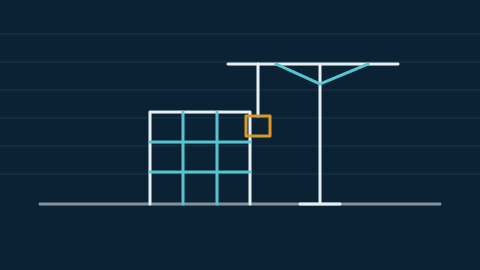
Work is split across many subcontractors, payment travels slowly down the chain, and arguments over what was finished are common.
School roof repairs
Hospitals and clinics buy equipment, supplies and services from many vendors, and need to show that what was paid for arrived, works and is maintained.
Imaging equipment for a district hospital
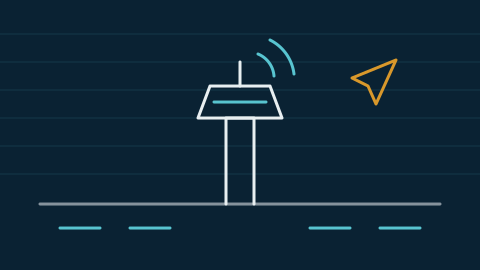
Programmes run for years with many suppliers. A delay in one contract holds up others, and a full picture of cost and schedule is hard to assemble.
Replacing a regional traffic control system
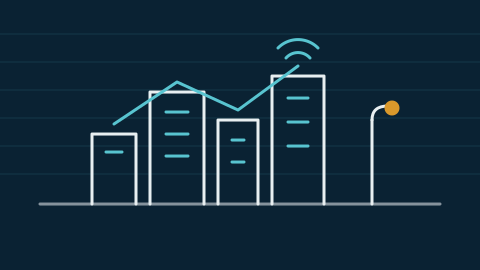
A smart city is built from many separate projects: sensors, street lighting, traffic systems, networks and data platforms, bought by different departments from different vendors over many years. The parts often cannot work together, and the city becomes tied to one supplier.
Connected street lighting for one district
Software projects are hard to judge from outside, requirements move, and buyers often pay for time spent instead of working results.
An online permit application service
Assets are spread over wide areas, the work is done on site by contractors, and proof of what was installed is often on paper.
Solar panels on 40 public buildings
Schools and universities commission buildings, equipment, transport and meals, often from small suppliers and with little administrative staff.
School meals for 12 schools
Thousands of small repair and maintenance jobs are ordered every year, and it is hard to know whether each one was done, done well and charged correctly.
Repairs service for 2,000 homes
Funders, delivery organisations and local suppliers sit in different countries, and donors want to see that the money reached the work.
Clean water points in 30 villages
What the platform is made of, where AI is used, and how data is protected.
Most of the platform is built the way any modern service is. The blockchain is one part of it, used only for the things that several parties need to verify for themselves.
Buyers, vendors and delivery teams work in ordinary apps, in the office or on site. A phone is enough to submit evidence or sign off a milestone.
Documents, messages, personal data and day-to-day working records are held in conventional systems, where they can be protected, corrected and deleted as the law requires.
Contract terms, milestone decisions and payments are written to a shared record that cannot be quietly changed afterwards.
The reason for the blockchain is practical. An ordinary database has an owner who can change it. A blockchain record can be checked by the buyer, the vendor and the auditor independently, so none of them has to take the others' word, or ours, that it has not been altered.
Sourcing and contract negotiation between buyers and vendors will involve AI where it is useful. It takes on the slow, repetitive parts of the work so that officers and suppliers can spend their time on judgement.
Matches a requirement to qualified vendors, including smaller and newer ones a buyer might not have found.
Drafts milestones, acceptance tests and payment terms from the requirement and standard clauses, and points out gaps or unclear wording to both sides.
Summarises each side's position, proposes wording both could accept, and translates between languages.
Gathers the evidence from the shared record, sets out both positions fairly and suggests a settlement. If either side declines, the dispute route in the written contract applies.
Every AI draft or suggestion is marked as such and kept on the record with the rest of the contract history.
The buyer decides which stages use AI assistance, and vendors are told before they take part.
Awards, acceptance of work, payment approvals and dispute outcomes are decisions made by named people.
These are the commitments we are designing to. The details marked below will be settled and published before any pilot handles real contract data.
Documents and personal data are stored in the country or region the buyer chooses. Only contract state and document fingerprints go on the blockchain.
Each person sees only what their role requires. The buyer's administrators control access for their own staff and auditors. Any access by our support staff is approved by the buyer and logged.
AI works only on the documents the parties bring into an AI-assisted step. One bidder's confidential material is never shown to another, and contract data is not used to train AI models.
Where AI processing runs, and which providers may handle buyer data.
Contract code and the apps will be independently tested before any live use.
The security standards and certifications we commit to, and by when.
Public bodies will not need to buy, hold or trade cryptocurrency. Pilots pay by ordinary bank transfer, with each approval and payment written to the shared record.
The state of the contract and a digital fingerprint of each document. The documents themselves, and any personal data, stay in storage the buyer controls.
No. The written contract remains the legal agreement. The smart contract carries out its milestone and payment terms and records what happened.
Variations are agreed by both parties and recorded as a new version. The earlier version stays visible, as it would in a contract file.
Either party can pause a milestone, and the dispute route in the written contract applies. Contract code is to be independently reviewed before any live use.
A buyer can export its full record at any time, and the record remains verifiable without us.
We want to hear from public bodies, companies, vendors, independent professionals and potential partners in every country, and from anyone who wants to give time or funding to the work.
This is a project for people who think public money and public work should be easier to follow. It needs more hands than it has.
We need people who work in procurement, contract law and audit, software engineers and designers, translators, and people who know how public bodies in their own country buy.
We are not yet set up to accept money. If you would like to support the work financially, tell us using the form below and we will contact you once the organisation is established and can receive funds properly.